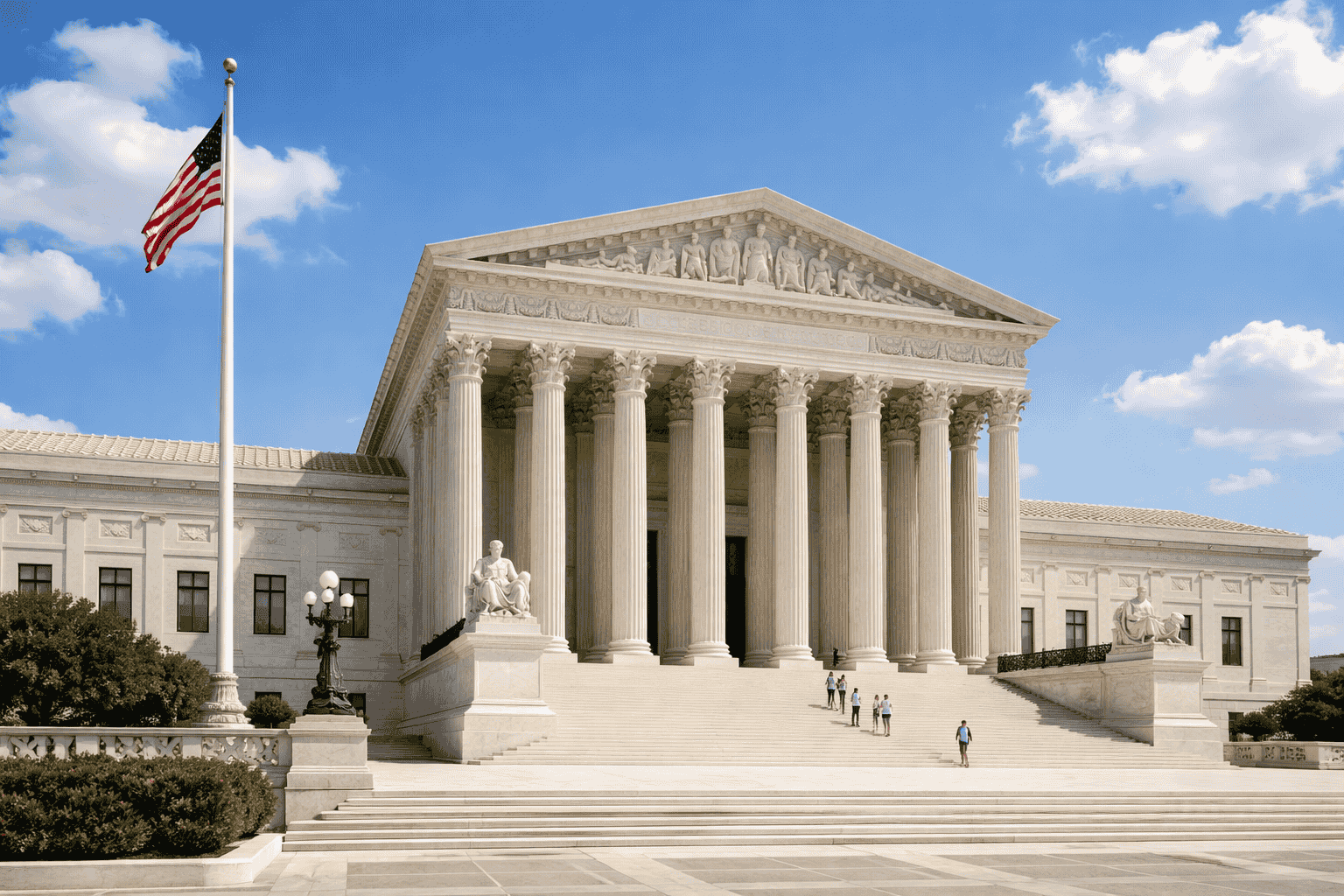
The U.S. Supreme Court has agreed to take up a landmark case that could reshape how law enforcement accesses cellphone location data during criminal investigations. At the center of the dispute is the growing use of geofence warrants, a tool that allows police to request location data from tech companies for every device near a crime scene during a specific time window.
Supporters argue the technique helps identify suspects when traditional leads fail. Critics warn it amounts to a digital dragnet that sweeps up data from innocent people, raising serious Fourth Amendment concerns.
What Are Geofence Warrants and Why Are They Controversial?
A geofence warrant compels companies like Google to provide anonymized location data for devices detected within a defined geographic area and time period. Investigators then narrow the list to identify potential suspects.
The controversy lies in scale. These warrants can capture data from dozens, hundreds, or even thousands of people who have no connection to a crime. Civil liberties groups argue this violates the Constitution’s ban on unreasonable searches by treating everyone near a location as a potential suspect.
The Case That Reached the Supreme Court
The case stems from a 2019 armed robbery at a Virginia credit union. Police struggled to identify a suspect until surveillance footage showed the robber using a cellphone. Investigators obtained a geofence warrant from Google, collected location data for devices near the bank, and ultimately identified Okello Chatrie.
Chatrie later pleaded guilty and received a sentence of nearly 12 years. However, his attorneys challenged the warrant, arguing it violated privacy rights by collecting data from countless uninvolved individuals.
Lower courts have split on the issue. One federal appeals court ruled geofence warrants are inherently unconstitutional, while another upheld their use, citing law enforcement’s “good faith.”
Why This Decision Matters
The Supreme Court’s ruling could set a nationwide standard for how digital location data is treated under the Fourth Amendment. A decision limiting geofence warrants would force police to rely on more targeted investigative methods. A ruling in favor of law enforcement could further normalize mass data collection in criminal probes.
The case also comes against the backdrop of the Court’s 2018 decision requiring warrants for cellphone location data, signaling growing judicial scrutiny of digital surveillance.
Google’s Policy Shift Complicates the Debate
Google has since changed how it stores location data, making compliance with geofence warrants more difficult. The federal government argues this reduces the need for Supreme Court intervention, but privacy advocates say the constitutional question remains unresolved.
The Court is expected to hear arguments later this year, with a decision that could redefine digital privacy in the smartphone era.