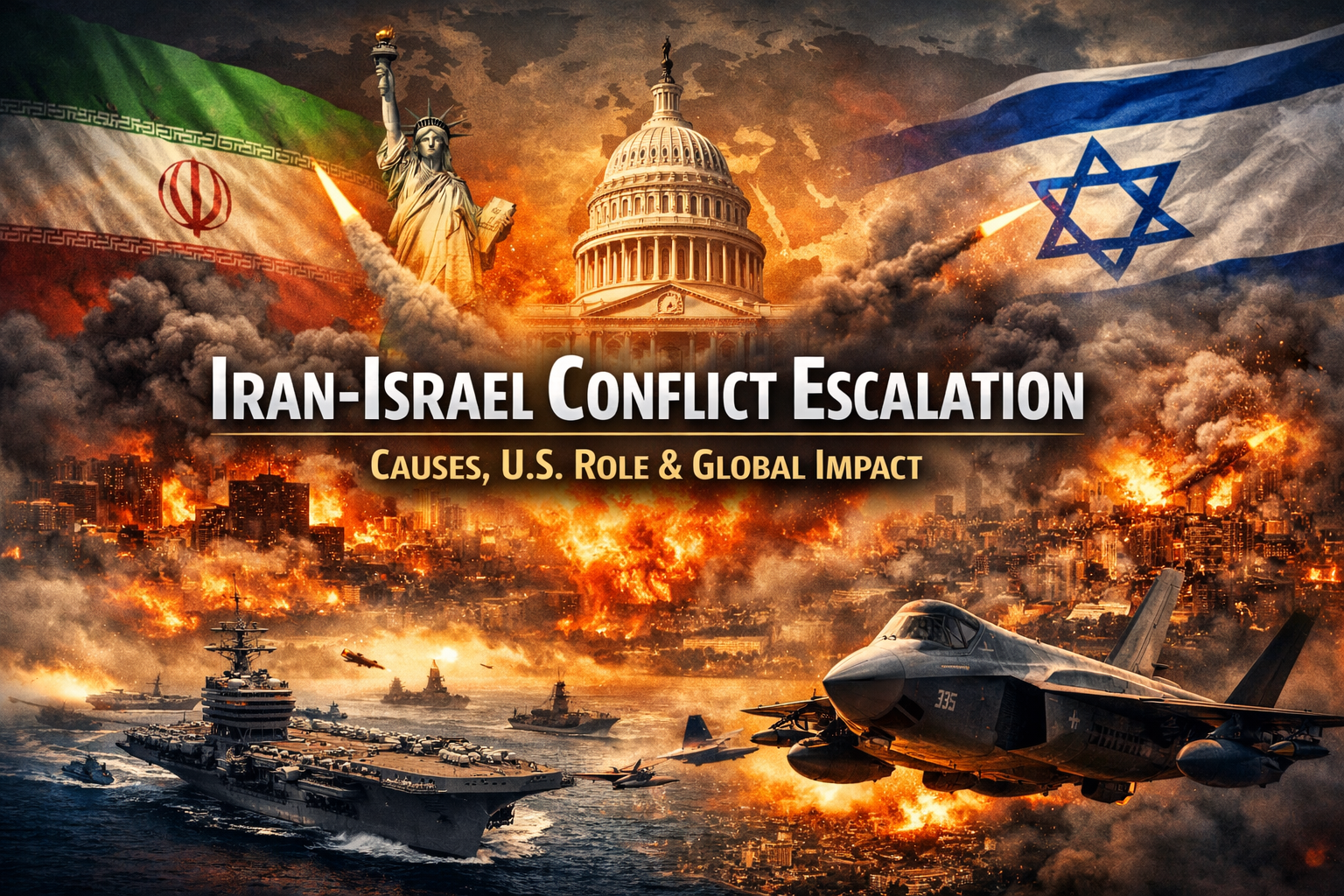
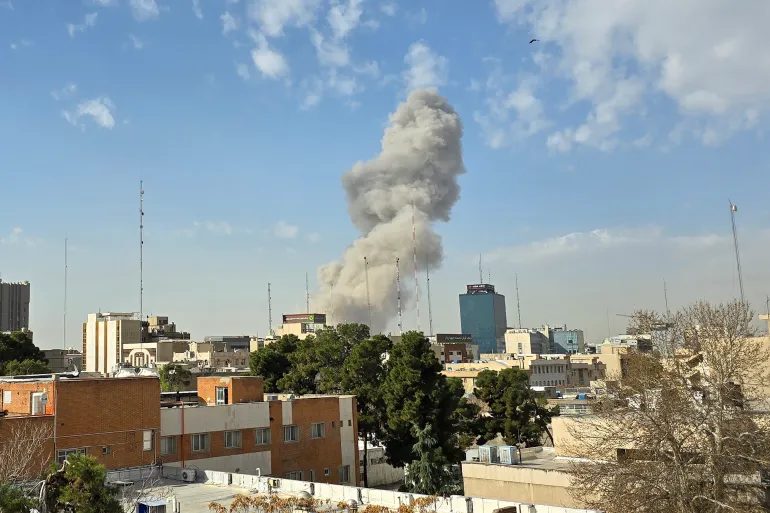
(WS News) – Smoke rises over Tehran after explosions on Feb. 28, 2026, as U.S. and Israeli forces launched a major joint strike on Iranian targets. The sudden escalation began when U.S. and Israeli jets struck sites across Iran on Feb. 28, 2026. This operation, the largest in decades, hit dozens of military and nuclear facilities in Tehran and other cities. Iran immediately retaliated by firing missiles and drones at Israel and at U.S. bases in the Gulf. The U.S. government said this “major combat operation” aimed to eliminate imminent threats from Iran’s regime. In the strikes, Iranian state media later reported that Supreme Leader Ayatollah Ali Khamenei was killed – a claim the U.S. president announced on social media and Iran ultimately confirmed.
Causes of the Conflict
Multiple factors fuel the Israel–Iran confrontation. Key drivers include:
- Nuclear ambitions: The U.S. and Israel accuse Iran of pursuing a nuclear-weapons capability. President Trump had warned that Iran “can never have a nuclear weapon” and claimed last June’s bombing raids on Natanz, Fordow and Isfahan “obliterated” Iran’s nuclear program. Iranian leaders insist they want only civilian nuclear power, but Western experts note Iran has enriched uranium to weapons-grade levels without a peaceful justification (a concern documented by the UN atomic agency).
- Ballistic missiles: Washington is alarmed by Iran’s growing missile arsenal. Trump repeatedly cited Iran’s work on long‑range ballistic missiles that he said could soon reach Europe or even the U.S. homeland. These claims were not backed by public evidence, but Iran’s missile tests (which it says are defensive) and talk of developing intercontinental rockets add to tensions.
- Regional power and proxies: Iran backs militant groups (Hezbollah, Hamas, etc.) and has long called for Israel’s destruction. The U.S. and Israel also cite a decades-old history of Iranian-sponsored attacks on Americans – from the 1979 storming of the U.S. embassy (444-day hostage crisis) to the 1983 bombing of a Marine barracks in Beirut – as justification. In particular, Israel views Iran’s support for Hamas (which carried out a major attack in 2023) as a serious threat.
- Domestic unrest: Iran has endured months of anti‑government protests amid a steep economic crisis. Iran’s security forces have violently suppressed these protests, with human-rights groups documenting thousands of deaths. Trump and other U.S. officials had publicly criticized Iran’s leadership for this repression and hinted at supporting Iranian dissidents as part of their rationale.
- Recent conflicts: The current clash follows a brief June 2025 Iran–Israel war, in which Israel bombed Iranian military sites and Iran fired missiles at Israeli cities. A U.S.-mediated ceasefire ended that flare-up, but left mutual grievances unresolved. In the weeks before Feb. 2026, U.S. and Iranian negotiators met (in Geneva, via Oman) to try to revive talks on Iran’s nuclear program, but talks failed to produce a lasting deal. The breakdown of diplomacy set the stage for the Feb. 28 strikes.
U.S. and Israeli Strikes on Iran
Late on Feb. 28, Israel and the United States unleashed a coordinated air attack on Iran. Hundreds of missiles and guided bombs were reported across Iran, including in Tehran and at least 13 other cities. The strikes targeted a mix of military bases, nuclear-related sites and government compounds. Iranian officials later confirmed that sites linked to the Supreme Leader’s office and other key facilities were hit. For example, a satellite image released by Airbus showed severe damage to Khamenei’s Tehran compound.
The human toll was significant. State media in Iran reported scores of civilian deaths. One of the most tragic incidents was a strike on a girls’ elementary school in Minab (southern Iran), which killed at least 51 children. In Tehran, missiles struck intelligence and defense ministry buildings; Iranian media said some students were killed when a school bus was hit near Tehran. Iran immediately replied by firing salvos of rockets, ballistic and cruise missiles and suicide drones at Israel and U.S. forces in the Gulf. Israel’s multi-tier defense (Iron Dome and other systems) intercepted most incoming missiles, but some debris still caused damage, and at least one Israeli soldier was lightly wounded.
Global Reaction and Impact
Worldwide leaders reacted with alarm. UN Secretary-General António Guterres condemned the escalation and urged an immediate ceasefire, warning that “bombs and missiles are not the way to resolve differences”. European leaders (France, Germany and the UK) likewise called for de-escalation and the protection of civilians. Some countries explicitly blamed Iran: a joint EU statement denounced Iranian strikes on military targets and insisted Iran must refrain from further “indiscriminate attacks”. Others echoed the call for resumed diplomacy.
The conflict has already rattled global markets. Iran’s missile barrages threatened shipments through the Strait of Hormuz (a strategic oil chokepoint), and some major trading houses halted tanker movements through the strait on Feb. 28. Energy analysts warned that Brent crude oil prices could spike dramatically if instability persists – for example, Barclays projected prices might briefly reach ~$100/barrel due to supply fears. Overall, experts expect an oil-price premium of 10–25% unless the crisis de-escalates. Stock markets and currency values have also been volatile, as investors hedge against geopolitical risk.
Key reactions included:
- UN: Ceasefire plea. António Guterres condemned the “military escalation” and urged all sides to return to the negotiating table. The UN Human Rights chief similarly warned that civilian lives were at risk and demanded an end to the bombing.
- Europe: Calls for restraint. Presidents Macron (France), Zelensky (?), and others pushed for an emergency UN Security Council meeting. Macron explicitly warned that the “current escalation is dangerous for everyone” and demanded Iran return to talks on its nuclear and missile programs. Germany and Britain issued a joint statement urging Iran to avoid indiscriminate strikes.
- Others: Canada’s prime minister voiced support for U.S. action to stop Iran obtaining a nuclear weapon. Spain’s government demanded respect for international law and urgent de-escalation. (No country openly threatened to enter the war on either side.)
- Economic fallout: OPEC officials suggested raising oil output to calm markets, while the U.S. and allies reviewed gas supply arrangements. Some Israeli gas platforms near the Gaza border were taken offline as a precaution after the strikes.
U.S. Military Role and Build-up
Washington has played a key coordinating role with Israel. In recent weeks the U.S. bolstered its Middle East forces to their largest concentration in decades. Two carrier strike groups – the USS Abraham Lincoln and USS Gerald R. Ford – are now in the region, supported by roughly 150 combat aircraft. In total, about 40,000–50,000 U.S. troops are deployed across Gulf bases from Bahrain to Qatar. Many of these forces are on heightened alert, with F-35 and F-22 stealth fighters flying frequent patrols out of U.S. airfields in the region.
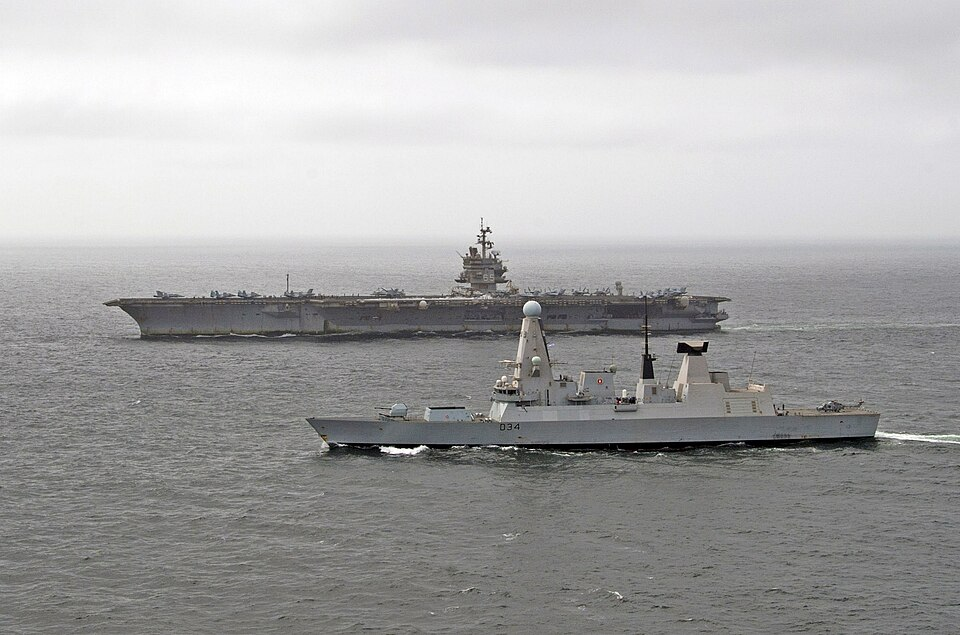
U.S. Navy ships in the Arabian Sea. The United States deployed two aircraft carrier strike groups (including the USS Enterprise and allied destroyers as shown above) to the Middle East as part of its military buildup. Despite the buildup, U.S. officials have stressed that any campaign will rely on air and sea power, not a ground invasion. The idea of sending U.S. combat troops into Iran has been dismissed by military leaders and Congress on grounds that there is deep public and bipartisan opposition to another large-scale Middle East ground war. The current operation is being carried out entirely from the air.
Key elements of the U.S. military posture include:
- Massive troop presence: Roughly 40,000–50,000 U.S. personnel are stationed at about 19 major locations across the Gulf region. Eight of these are large permanent bases in Bahrain, Qatar, Kuwait, UAE, Saudi Arabia, Egypt, Iraq and Jordan.
- Carrier strike groups: The USS Abraham Lincoln and USS Gerald Ford each bring 60–80 warplanes and thousands of sailors to the theater. These carriers operate with accompanying cruisers and destroyers for missile strikes and air cover.
- Air power: The 150+ U.S. aircraft in the region include advanced fighters (F-35, F-22), bombers and early-warning planes. For instance, U.S. F-35 jets previously escorted B-2 stealth bombers in the June 2025 attacks on Iran’s nuclear sites. (A U.S. Air Force press release noted that in that raid F-35s “paved the way” for B-2 bombers to drop massive ordnance penetrators on Fordow, Natanz and Isfahan.)
- No invasion plan: All signs indicate the U.S. will avoid sending ground forces into Iran. As one retired general remarked, an invasion is “not going to happen” and the fight will be waged from the skies.
The close U.S.–Israel coordination – including shared targeting data and rules of engagement – marks an unprecedented joint effort. President Trump and Israeli Prime Minister Netanyahu have termed the campaign as necessary to deter Iran. Trump’s social media statements framed it as defending “American people” and allies by “eliminating threats from the Iranian regime”. Whether this effort will achieve its aims remains to be seen; U.S. officials have signaled it could continue for days or weeks, and have not ruled out additional strikes if Iran persists in its current course.
In summary, the current Iran–Israel clash stems from long‑standing disputes over Iran’s nuclear program, military capabilities and regional influence. The Feb. 28 attacks by the U.S. and Israel represent a major escalation aimed at destroying perceived Iranian threats. However, the conflict has already sparked international condemnation and raised fears of a wider Middle East war and economic shock. Neutral observers caution that only a return to diplomacy can prevent further devastation in the region.
Sources: Latest reports from Reuters, Al Jazeera, The Guardian and official U.S. military releases have been used to summarize the strikes, stated objectives and global reactions. Each fact above is cited to reputable news and government publications