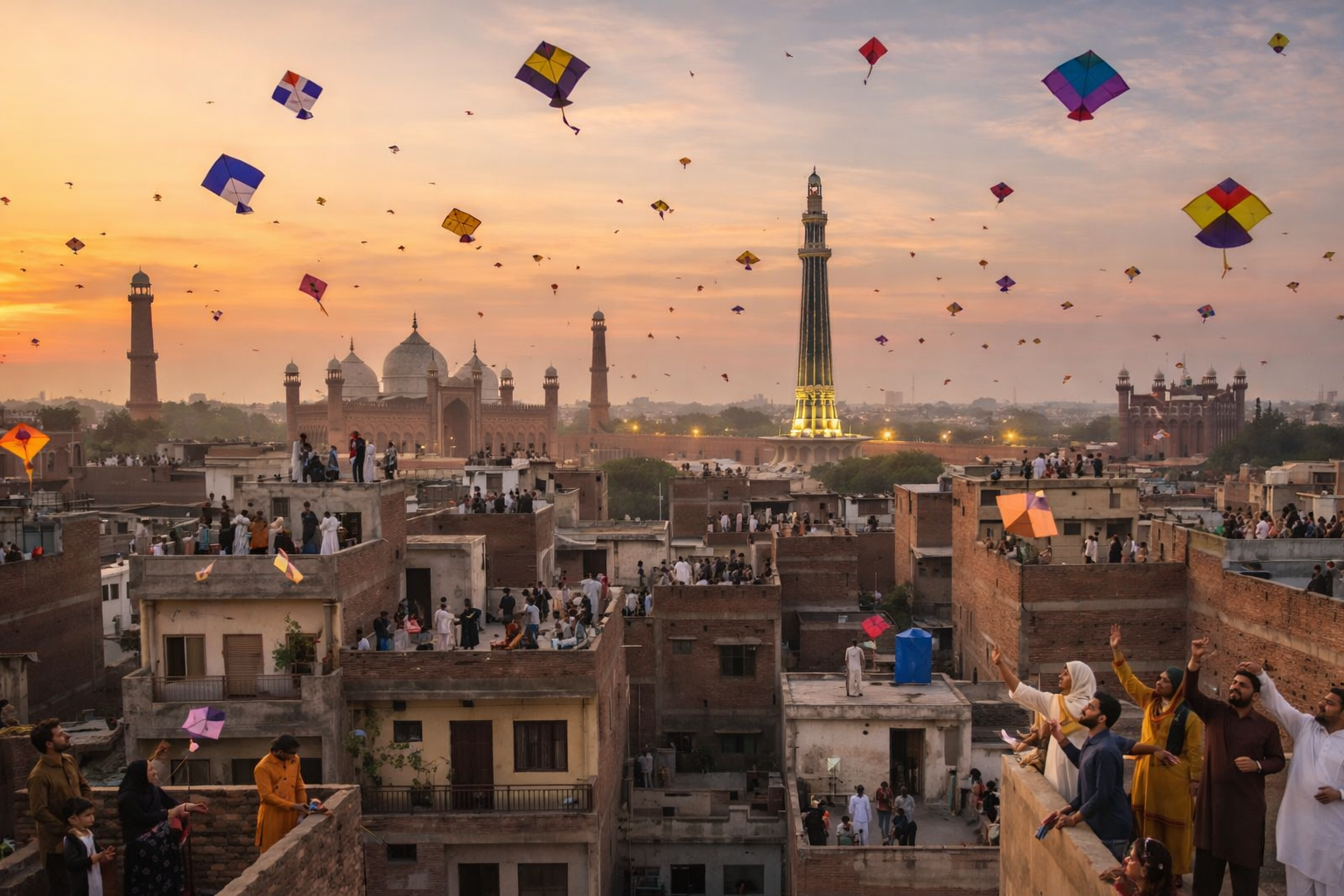
LAHORE (WS News) – After roughly two decades of bans and debate, Basant — Lahore’s legendary kite festival — is legally returning on 6–8 February 2026 under a strict regulatory framework. The Punjab government has published clear rules: registration, traceability, size and material limits, age restrictions, CCTV monitoring in red zones, and heavy penalties for violations. This is no free-for-all revival. It’s an experiment in bringing a cultural tradition back without repeating the tragedies that shut it down.
The rules that matter (quick summary)
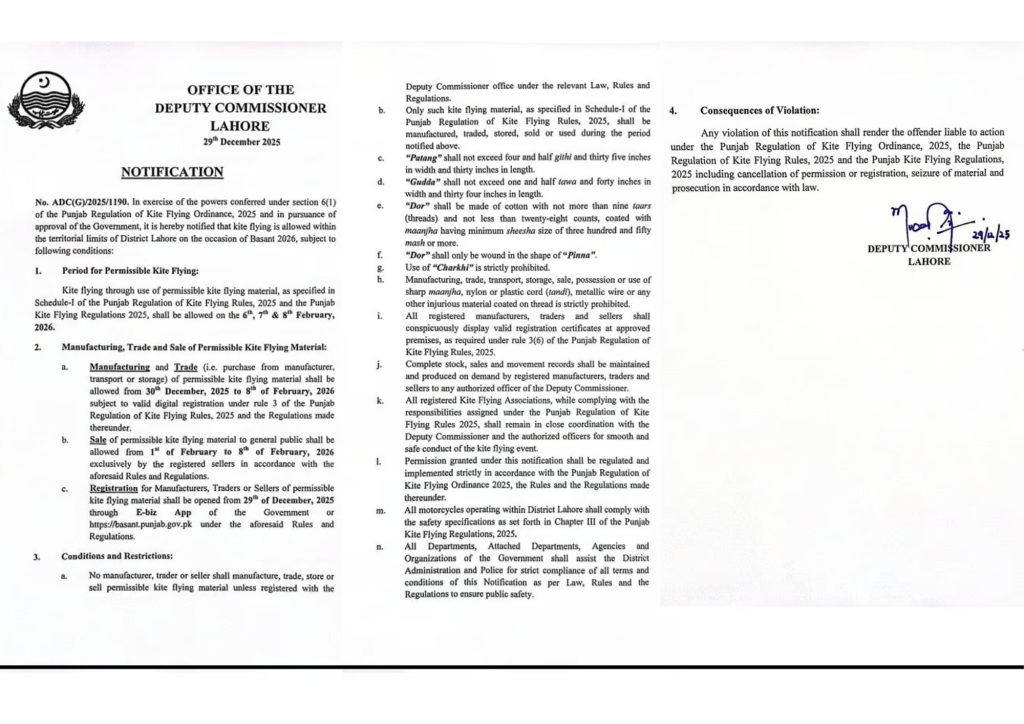
- Manufacturing & trade window: Registered producers may make and sell kites from 30 Dec 2025 to 8 Feb 2026.
- Public sales window: Consumers can buy kites 1–8 Feb 2026.
- Official celebration days: 6–8 Feb 2026 (only where DCs permit).
- Registration + traceability: All manufacturers/traders must register; each kite must carry a QR code linking to the seller.
- String and spool limits: Strings limited to 9 threads, strict ban on metal/chemical coatings; spool (gudda) max ~30–35 cm; large “Baba Gudda” kites banned.
- Age & penalties: Under-18s banned from flying; adults face 3–5 years jail and fines up to Rs 2 million for violations.
- Red zones & enforcement: 40 red zones identified; Safe City CCTV and joint police/traffic teams will monitor; motorcyclists limited to 60 km/h and may need safety wires.
Why the government thinks this can work
The new approach tries to tackle both the safety problem and the economic reality. For years the Basant supply chain (kite makers, string producers, vendors) went underground — unregulated, untaxed, and unsafe. Registration, QR codes and permitted manufacturing windows turn a shadow economy into a traceable one. If enforced properly, that helps reduce dangerous materials and holds sellers accountable.
The real risks — and how to neutralize them
History isn’t a rumor: coated or metalized manja sliced through throats and tires, killing riders and bystanders. The regulations address that directly, but rules alone won’t be enough.
Practical, non-negotiable safeguards needed now:
- Strict material testing & certification — independent labs must verify strings and ban chemically treated products.
- On-site vendor audits during the manufacturing window. QR codes are worthless if certification is fake.
- Active enforcement in red zones with mobile rapid-response medical teams and blocked rooftop access where risk is high.
- Public awareness blitz (TV, radio, social) weeks before the festival; clear do’s and don’ts.
- Mandatory helmets and visibility gear for two-wheelers in festival days, plus enforced speed checks.
- Data collection: every injury must be logged publicly so we can evaluate the festival’s safety footprint year-to-year.
If these measures aren’t enforced from day one, the ban was effectively lifted only to invite the same carnage.
Cultural and economic upside
Basant is more than kites — it’s tourism, remittances, crafts, and a shared civic moment. It once drew Pakistanis from abroad, boosted local micro-businesses, and stitched neighborhoods together. Formalizing the industry can restore livelihoods, expand the tax base, and keep artisanal skills alive — if small vendors are supported with training, affordable compliance checks, and fair enforcement.
My take: cautiously optimistic — but conditional
Bring Basant back if—and only if—these rules are enforced transparently and immediately. This means real inspections, credible certification, active policing of red zones, and independent medical readiness. If enforcement proves weak in the first year, civil society should push for suspension until the system is fixed.