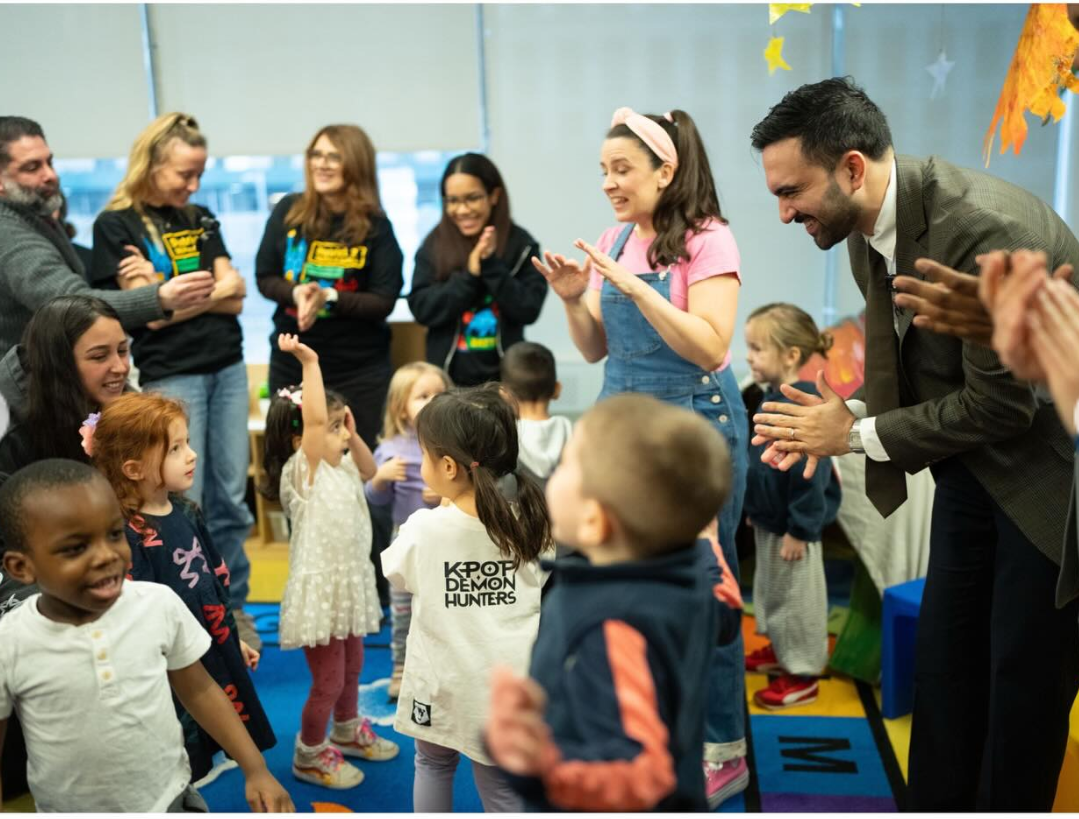
NEW YORK (WS News) – For years, New York families have faced the same harsh reality: child care is unaffordable. For many working parents—especially mothers—the cost has forced impossible decisions, including leaving jobs, delaying having children, or moving out of the state altogether.
This week, New York State took a decisive step toward changing that.
Governor Kathy Hochul, alongside New York City Mayor Zohran Mamdani, announced a sweeping plan to expand free and affordable child care for children under five, including a landmark initiative to provide free child care for two-year-olds in New York City. If fully implemented, the plan could significantly reshape how families live, work, and raise children across the state.
Why Child Care Became a Breaking Point in New York
Before the solution, the problem needs to be clear.
In New York, annual child care costs range between $26,000 and $40,000 per child—more than double the cost of tuition at many SUNY colleges. Families earning even half of the city’s median income often spend up to 50% of their income on child care alone.
That math is unsustainable.
The consequences have been predictable: parents leaving the workforce, families postponing children, and workers leaving New York entirely. Governor Hochul, drawing from her own experience as a working mother, emphasized that when child care fails, the entire economy feels the impact.
What the New Plan Actually Includes
This initiative is not a single program—it’s a coordinated roadmap toward universal child care.
1. Free Child Care for Two-Year-Olds in NYC (2-Care)
For the first time, New York City will offer completely free child care for two-year-olds, with the state fully funding the initial years of implementation.
The rollout will:
- Begin in high-need neighborhoods
- Expand citywide over several years
- Be paired with reforms to strengthen the existing 3K program
This is a significant shift. Most public child care programs begin at age three or four, but this plan recognizes that families need support earlier—when costs are often highest.
2. Universal Pre-K for Every Four-Year-Old by 2028–29
Access to Pre-K has long depended on location. While some districts offer it universally, many do not.
Under the new plan, New York State will:
- Guarantee universal Pre-K for all four-year-olds statewide
- Increase funding to at least $10,000 per seat, adjusted by district aid levels
- Commit roughly $500 million to close regional gaps
The goal is straightforward: ensure every child enters kindergarten prepared, regardless of zip code.
3. Expanded Child Care Subsidies for Working Families
The state has already made major changes—and plans to expand them further.
Since Governor Hochul took office:
- The number of children receiving child care vouchers has more than doubled
- Income eligibility expanded from about $64,000 to $114,000 for a family of four
- Weekly child care costs for many families are capped at $15
- Provider reimbursement rates increased by nearly 50%
The upcoming budget adds $1.2 billion, bringing total child care subsidies to over $3 billion annually. This isn’t symbolic spending—it directly determines whether families can afford to work.
Community-Based Child Care Models Beyond NYC
New York City is not the entire state, and the plan reflects that reality.
Beginning in 2026, New York will pilot community-based child care programs in counties outside NYC. These models are designed to provide:
- Full-day, year-round care
- Access regardless of family income
- Collaboration between counties, providers, and the state
This flexibility is essential for rural and suburban communities where traditional child care systems often fail.
Strengthening the Child Care Workforce
Child care cannot expand without workers—and retention has been a chronic challenge.
The plan includes:
- Expanded scholarships for early childhood educators
- Streamlined training pathways through SUNY and CUNY
- Exploration of workforce Pell Grants
- Oversight through a new Office of Child Care and Early Education
This office will coordinate programs from Pre-K to 2-Care, reducing fragmentation and improving long-term stability.
The Bigger Picture
Universal child care is not just a social policy—it’s economic infrastructure.
Families could save tens of thousands of dollars per child each year, parents can remain in the workforce, and children gain access to consistent early education. For New York, the message is clear: supporting families is no longer optional—it’s essential.
Whether this ambitious plan succeeds will depend on execution. But one thing is certain: New York has moved beyond promises and into action.